Cast Iron vs. Enameled Cast Iron:
What Should You Buy?
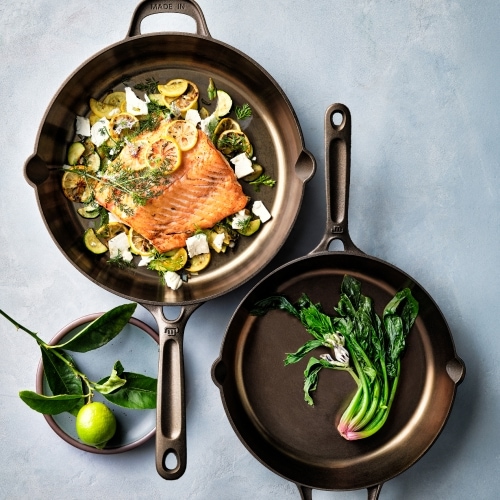
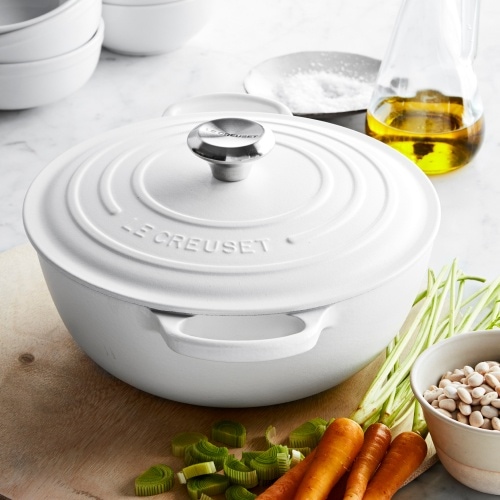
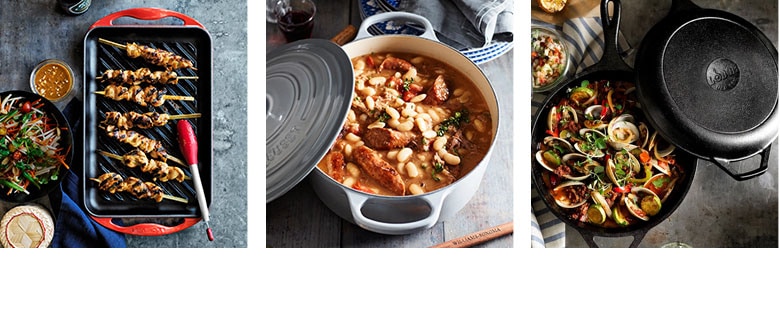
Cast iron comes in two basic varieties: traditional, which needs to be seasoned, and
enameled, which does not. Both have benefits. Traditional cast iron is less costly and
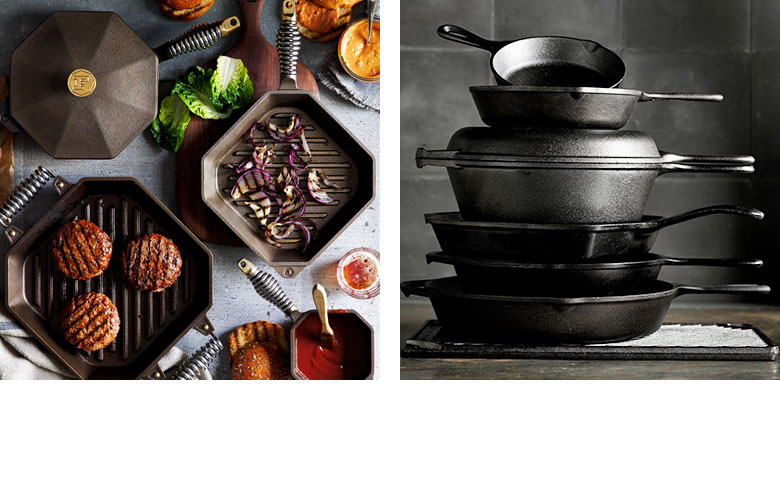
lasts indefinitely, but it needs to be properly cleaned and seasoned.
(Some traditional cast-iron brands like Lodge and Finex come preseasoned for a finish
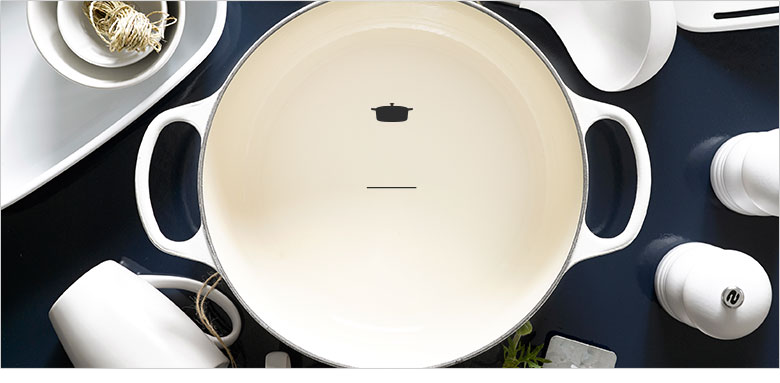
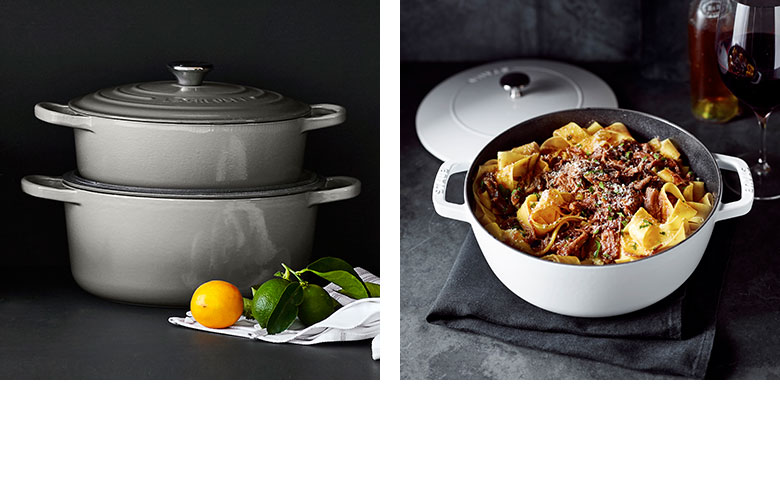
that resists sticking and rust.) Enamel-coated cast iron is more expensive, but it
doesn't require seasoning, and its surface won't react to acidic foods such as
citrus-based sauces. There's no winner; it all comes down to personal preference.

Q & A: Caring for Cast Iron
Advice from Williams Sonoma cookware expert Katie Roberts on
how to store, season and clean your cast iron with ease.
CLEANING
Q. What is the proper
way to clean cast iron?
A. After cooking, allow your
cast iron to cool (never
cover a scalding hot pan
in water; it can crack).
Clean it thoroughly by
scrubbing it with hot water
and a nylon brush; avoid
using soaps and detergents.
Whatever you do, don’t leave
it to soak in the sink!
SEASONING
Q. How should you season
cast iron so it becomes more
nonstick over time?
A. Season by heating it over
a stovetop to dry, then use a
towel to apply a thin coat of
oil, and pop it into a 350°F
oven for an hour. Turn the
oven off and allow the pan
to cool in the oven.
STORING
Q. How do you store cast
iron so it doesn’t get rusty?
A. Make sure it’s cleaned,
completely dry, seasoned
and cooled before stowing
it away in a cool, dry place.
Explore Our Cast-Iron Collections