






Pork ranges in color from very pale pink to a rosy hue. In general, the more color, the better the flavor. Pale pork, a sign of poor quality, signals that the meat will lack flavor and dry out easily. The marbling and exterior fat should be perfectly white, never yellow, and the surface of the meat should be springy and moist, not wet. When it comes to freshness, let your nose be your guide.
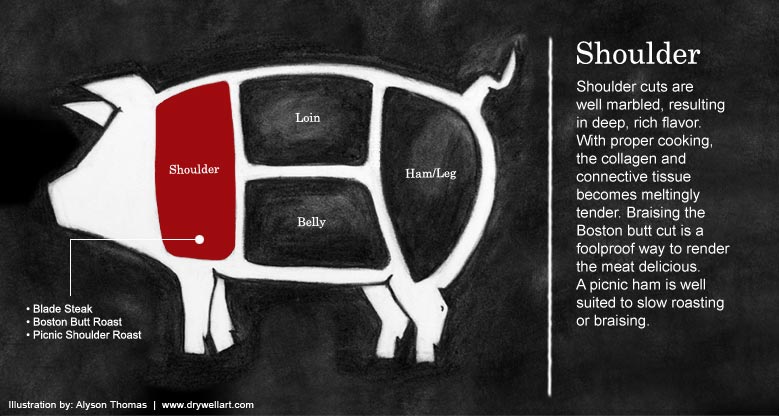
Fear of trichinosis once dictated that pork be cooked to an internal temperature of 160ºF. Trichinosis is actually killed at 137ºF, and therefore the widely accepted doneness temperature for pork is now 145ºF. Well-marbled cuts such as the shoulder will maintain their juiciness when slowly cooked to a higher temperature, but leaner cuts such as the loin will dry out quickly when cooked above 145ºF.
Marbling is the most crucial attribute in high-quality pork and indicates how tasty the meat will be. In the United States, consumers' avoidance of pork due to a concern for dietary fat prompted conventional producers to breed leaner pigs. However, lean pork has little flavor, and the lack of marbling can make it dry and chewy.
Heirloom breeds such as Berkshire, Duroc, and Yorkshire have become more widely available. Due to the pigs' varied diet, their meat is rich tasting, juicy and tender. To determine the best choice for your needs, ask your butcher about whether a pig was feedlot or pasture-raised as well as what it was fed: grain or grass and wild forage.